Sourdough Troubleshooting Diagnostic Guide: Fixing Dense Gummy Crumb, Flat Loaves, Flying Crusts, and Harsh Acetone Sourness
Read your sourdough crumb like a professional baker: how to tell under-fermented "fool’s crumb" apart from over-fermented collapse, eliminate gummy streaks, fix pale crusts, and dial in exact sourness.

Complete Sourdough Symptom & Root-Cause Diagnostic Matrix
| Visual / Sensory Symptom | Primary Diagnosis | What Happened Chemically | Exact Fix for Your Next Bake |
|---|---|---|---|
| Dense, rubbery bottom band + 2–3 huge caves near top (“Fool’s Crumb”) | Under-Fermented | Yeast produced too little gas to inflate the lower crumb; trapped gas pooled at the crown | Wait until your starter doubles before mixing, and extend bulk fermentation by 60–90 minutes. |
| Flat “frisbee” puddle that spreads out of the banneton; uniform tiny collapsed holes | Over-Fermented | Excess lactic/acetic acid and protease enzymes dissolved the gluten scaffolding | End bulk fermentation earlier (at 35%–50% rise if dough temp is 78–80°F) and verify fridge temp is 37–39°F. |
| Tall loaf with good holes, but crumb feels sticky and gummy on the knife | Sliced Hot or Under-Baked | Starch hydrogel did not finish retrograding/crystallizing before the blade compressed it | Bake to 208°F internal temp and cool on a wire rack for at least 90–120 minutes before slicing. |
| Loaf bursts violently out the side or bottom instead of the score line | Insufficient Steam or Shallow Score | Top skin dried and hardened before oven spring finished, forcing gas out the weakest seam | Score a full 1/2 inch deep at a 30° angle and add 1 ice cube inside the preheated Dutch oven. |
| Tough, leathery crust that is hard to chew | Dry Heat / Over-Steamed Late Bake | Oven lacked initial steam OR lid was kept on too long at low heat | Preheat Dutch oven 45 minutes at 500°F; bake 20 min covered at 475°F, then 22 min uncovered at 450°F. |
| Harsh vinegar or nail-polish-remover aftertaste | Over-Acidified Starter | Acetic acid bacteria dominated due to neglected starter or ultra-long cold proof | Give your starter two 1:5:5 refresh feedings before building levain. |
How to Rescue an Over-Fermented Dough Ball (The Focaccia Pivot)
If you lose track of time during bulk fermentation and return to find a soupy, over-proofed dough that refuses to hold shape on the bench, do not throw it away and do not try to force it into a boule:
- Pour 3 tablespoons of extra virgin olive oil into a 9×13-inch baking pan.
- Scrape the over-fermented dough directly into the oiled pan and gently stretch it toward the corners.
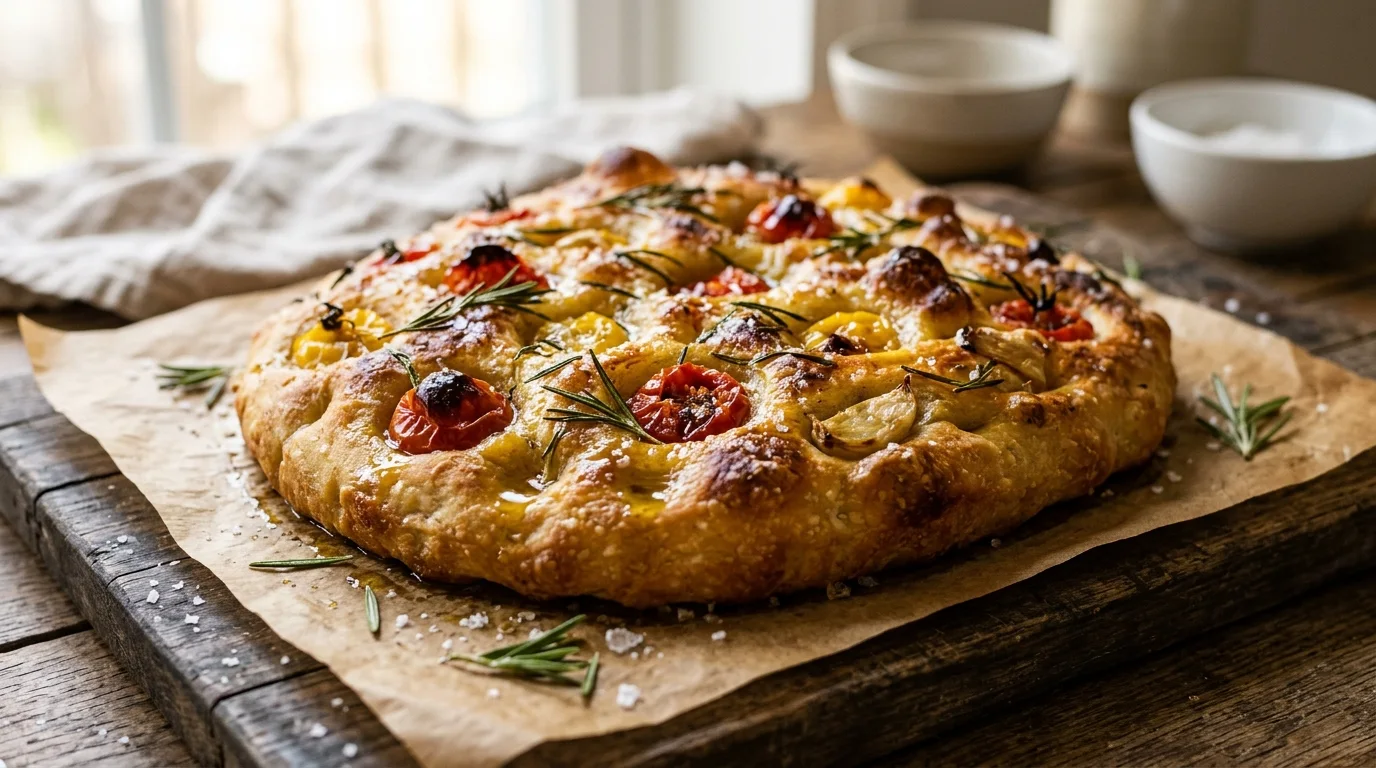
- Rest 30 minutes at room temperature, dimple with oiled fingertips, scatter rosemary and flaky sea salt, and bake at 450°F for 24 minutes just like our Overnight Rosemary Sourdough Focaccia. The pan walls support the slack gluten, turning a failed boule into an extraordinary focaccia.
Frequently Asked Questions
Array
Continue Reading
More from Sourdough & Wild Fermentation

2 min read
Is Sourdough Bread Vegan? Grocery and Bakery Label Checks for Honey, Whey, L-Cysteine, and Milk Wash
How to verify whether supermarket, restaurant, or bakery sourdough bread is 100% vegan in 30 seconds: spotting hidden dairy, honey, L-cysteine dough conditioners, mono- and diglycerides, and egg/milk washes.
2 min read
Sourdough Fermentation and Gut Health: How Wild Lactic Acid Bacteria Degrade Phytic Acid, Lower Glycemic Response, and Reduce FODMAPs
The peer-reviewed nutritional biochemistry of long-fermented sourdough: how pH below 5.5 activates phytase to unlock iron, zinc, and calcium, reduces wheat fructans (FODMAPs), and moderates post-meal glucose spikes.
2 min read
Gluten-Free and Ancient Grain Sourdough: Brown Rice Starters, Psyllium Husk Gel Mechanics, and Einkorn/Rye Hydration Adjustments
How to build a celiac-safe brown rice or sorghum sourdough starter, engineer elastic gluten-free doughs with whole psyllium husk gel, prevent purple crumb discoloration, and bake with einkorn, spelt, and dark rye.