Vegan Potluck Math: How Much Food to Bring, Plus Ideas That Travel Well
A simple formula for how much vegan food to bring to a potluck, quantity charts by dish type, food safety timing, and crowd-pleasing ideas that travel.
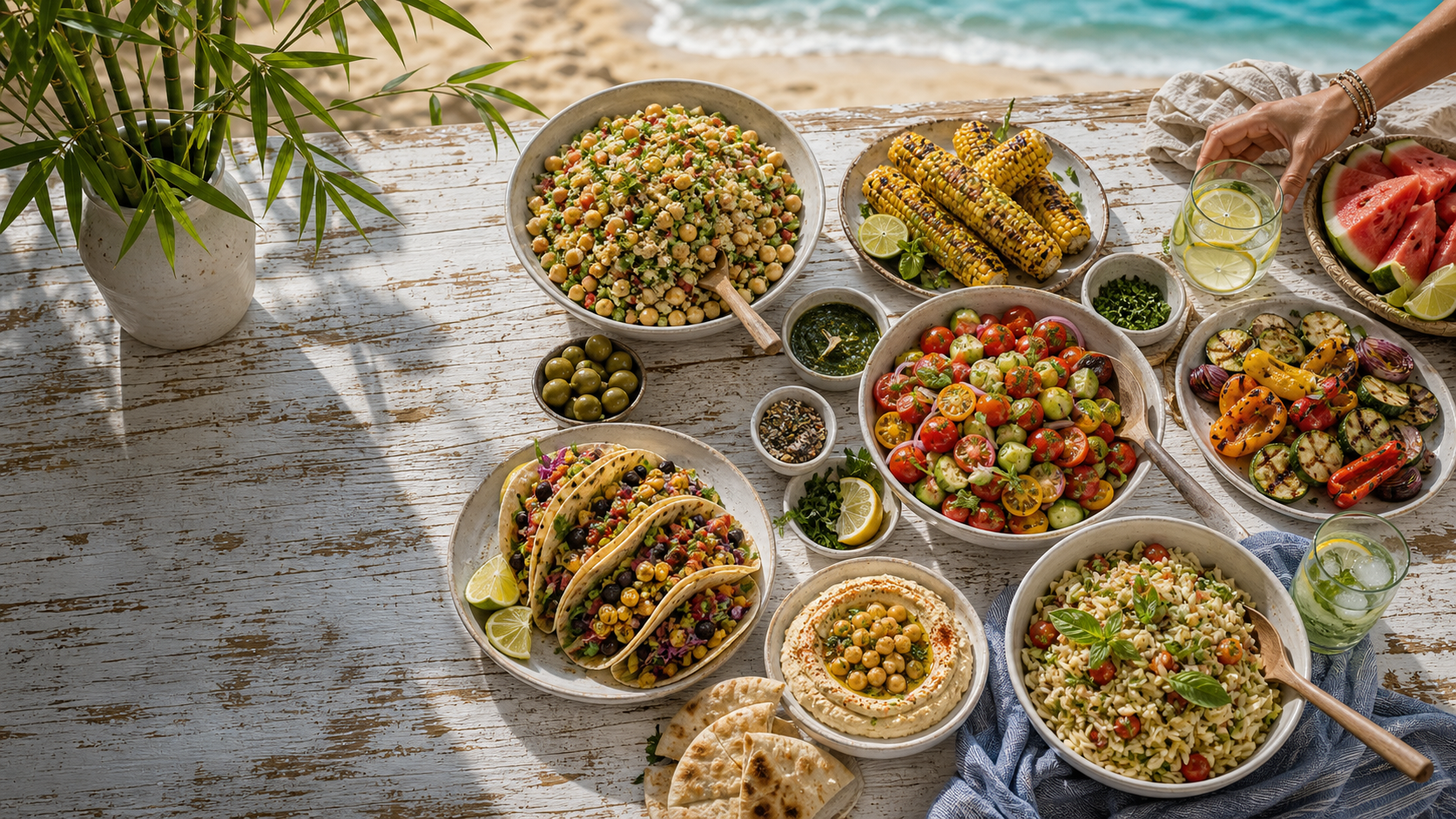
Potlucks are one of the easiest places to share vegan food, and one of the easiest places to get the quantities wrong. Bring too little and the vegans at the table leave hungry. Bring too much and you haul home half a slow cooker of chili. The math below gives you a reliable number, and the ideas that follow are chosen because they travel, hold, and win over people who do not usually eat vegan.
The potluck formula
At a sit-down dinner, each guest eats one full serving of each dish. At a potluck, they take a smaller portion from many dishes. A widely used catering rule of thumb is about 1 to 1.5 pounds of total food per adult across all savory dishes at a meal-sized event. Your dish only needs to cover its share.
That leads to a simple starting point:
- Base servings = headcount ÷ 2. Most guests take a half portion from roughly half the dishes, so this covers your share with a small buffer.
- Add the vegan buffer. If your dish is one of the only vegan mains, add one full serving for every vegan or vegetarian guest, including yourself. They will likely make a meal of it.
- Adjust for the event. Add about 25 percent if the potluck replaces dinner and runs long. Subtract about 25 percent if it is an afternoon event with lots of snacks.
| Total guests | Base full servings | With 3 plant-based eaters and yours as the only vegan main |
|---|---|---|
| 10 | 5 | 8 |
| 20 | 10 | 13 |
| 30 | 15 | 18 |
| 50 | 25 | 28 |
For very large events, such as 50 or more guests with a long table of dishes, you can safely drop toward one-third of the headcount, since people spread themselves across more options.
Quantity guide by dish type
Once you know how many servings you need, these reference amounts turn that number into a shopping list. Serving sizes here are generous side-dish portions; a main-dish serving is roughly double.
| Dish type | Side serving | What makes about 12 side servings |
|---|---|---|
| Pasta salad | About 3/4 cup | 1 pound dry pasta, which cooks to roughly 8 to 9 cups |
| Grain salad (quinoa, farro, rice) | About 1/2 cup | 2 cups dry grain, cooking to roughly 5 to 6 cups, plus 3 to 4 cups vegetables and beans |
| Bean salad | About 1/2 cup | Four 15-ounce cans of beans, drained, plus vegetables and dressing |
| Chili or stew | About 3/4 cup | 9 to 10 cups finished, which fits a 5- to 6-quart slow cooker |
| Roasted vegetables | About 1/2 cup | About 4 pounds raw vegetables, since they shrink as they roast |
| Green salad | About 1 cup | 12 to 14 cups loosely packed greens, dressing on the side |
| 9×13-inch casserole or bake | 1 square | One pan cut 4 by 3; for a main, the same pan feeds about 8 |
| Dip (hummus, bean dip) | 2 to 3 tablespoons | About 1 1/2 to 2 1/4 cups, plus dippers |
| Bread or rolls | 1 to 2 pieces | 18 to 24 rolls or two large loaves, sliced |
| Brownies or bar cookies | 1 square | One 9×13-inch pan cut into 24 pieces covers about 20 guests |
How to scale a recipe up without ruining it
Most potluck dishes start as a recipe for four or six. Multiplying it is mostly simple arithmetic, with a few exceptions that catch people out.
- Main ingredients scale directly. Double the beans, grains, pasta, and vegetables when you double the servings.
- Salt, spices, and chili heat scale more cautiously. When doubling or tripling, start with about three-quarters of the multiplied amount, then taste and adjust. Strong spices can dominate a big batch.
- Liquids in stews and chili need less than a straight multiple. A larger pot loses proportionally less liquid to evaporation, so add the last portion of broth only if the pot looks dry.
- Use more pans, not deeper ones. Two 9×13-inch pans bake more evenly than one overfilled roasting pan. For roasted vegetables, spread them in a single layer across several sheet pans so they brown instead of steaming.
- Allow extra cooking time. A big pot takes longer to come to a simmer, and a full oven recovers heat more slowly. Start earlier than you think you need to.
- Dressings go on late. Leafy salads wilt within an hour of dressing; grain and bean salads improve. Dress accordingly.
If you are converting a non-vegan crowd favorite, the guide to veganizing a family recipe walks through keeping the flavor that made it popular.
Vegan potluck ideas that travel and hold well
The best potluck dishes taste good warm or at room temperature, survive a car ride, and do not need last-minute assembly. They should also look familiar enough that non-vegans try them without hesitation.
Mains
- Chili in a slow cooker: plug it in on arrival and set it to warm. The smoky chipotle black bean and sweet potato chili is hearty enough to anchor a vegan plate.
- Enchilada or pasta bakes: bake at home, wrap in foil and towels, and they stay warm for about an hour. Try the creamy black bean enchilada bake.
- Lentils and rice: mujadara with crispy onions is excellent at room temperature. Pack the onions separately so they stay crisp.
Sides and salads
- Bean salads: sturdy, protein-rich, and better after an hour of marinating. The 15-minute vegan bean salad method scales easily.
- Grain salads with a sharp dressing: lemon, mustard, and herbs keep them bright.
- Herby tomato and butter bean salad: the Greek herby butter bean and tomato salad travels well in a lidded bowl.
Desserts
- Brownies, blondies, and bar cookies cut cleanly and need no plates.
- Fruit crisps baked in a disposable pan.
- Chocolate-dipped fruit, kept cool until serving.
Food safety timing for potlucks
Potlucks carry more food safety risk than home dinners because food travels and sits out. Standard guidance from food safety agencies is straightforward:
- Two-hour rule: perishable food should not sit between 40°F and 140°F (4°C and 60°C) for more than 2 hours total, or 1 hour when it is hotter than 90°F (32°C) outside.
- Hot food: keep at 140°F (60°C) or above. A slow cooker on warm or an insulated carrier helps.
- Cold food: keep at 40°F (4°C) or below. Nest salad bowls in a larger bowl of ice, or bring a cooler.
- Cooked rice and grains: cool quickly, refrigerate, and do not leave them out longer than the two-hour window.
- Count travel time as part of the two hours if the food is not kept hot or cold on the way.
Label it so people can choose confidently
A small folded card beside your dish does more than any speech about veganism. Include:
- The dish name, such as “Smoky Black Bean Chili.”
- “Vegan: no meat, dairy, eggs, or honey.”
- Major allergens: nuts, peanuts, soy, sesame, gluten, and any others present.
- Toppings on the side, if you packed them separately.
Labels help guests with allergies, religious dietary rules, and dairy intolerance, which is why vegan dishes are often the first to disappear.
Potluck logistics checklist
- Bring your own serving spoon or tongs, labeled with your name.
- Transport in the dish you will serve from, with a lid.
- Pack garnishes and dressings separately, and add them on arrival.
- Bring a small container so you can take a portion of your own dish if you want leftovers.
- Check with the host about oven or outlet access before you plan a hot dish.
- If you are not sure what else will be vegan, eat a small snack before you go.
What to say to the host
A quick message avoids duplicate dishes and sets expectations:
“Looking forward to Saturday. I’m planning to bring a vegan black bean chili, enough for about fifteen people. Is that a good fit, or would a salad or dessert be more helpful?”
If you are hosting and want to coordinate vegan guests, see how to host non-vegan guests without anyone missing anything, which works just as well in reverse.
Your next step
For your next potluck, count the guest list, apply the formula, and pick one dish from the lists above. If you are stuck on what to make from what you already have, the Fridge Scan tool can suggest a vegan dish from your pantry. Write the label card the night before so you are not hunting for a pen on the way out the door.
Frequently Asked Questions
How many servings should I bring to a potluck?
When every household brings a dish, plan full servings for about half the headcount. If yours is the only vegan main, add a full serving for every vegan or vegetarian guest on top of that.
How much food per person at a potluck?
A common rule of thumb is about 1 to 1.5 pounds of food per adult across all savory dishes, plus dessert. Your dish only needs to cover its share of that total.
What vegan dish is best for a potluck?
Dishes that hold well at room temperature or in a slow cooker travel best: chili, bean or grain salads, pasta salads, enchilada bakes, lentil and rice dishes, and bar cookies or brownies.
How long can potluck food sit out?
Food safety guidance says perishable food should not sit at room temperature for more than 2 hours, or 1 hour if it is above 90°F (32°C). Keep hot food at 140°F (60°C) or above and cold food at 40°F (4°C) or below.
Should I label my vegan potluck dish?
Yes. A small card with the dish name, the word vegan, and major allergens such as nuts, soy, sesame, and gluten helps everyone choose confidently.
Continue Reading
More from Hosting & Family
3 min read
Vegan Potluck Planning: Portions for 8, 12, or 20
Potluck portions depend on dish role: plan more for mains and less for sides or desserts.