Sourdough Scoring, Steam Mechanics, and Dutch Oven Baking: How to Get Maximum Oven Spring and a Blistered Ear
The physics of oven spring, lame blade angles (30° for a dramatic ear vs. 90° for symmetric bloom), rice flour dusting, Dutch oven ice-cube steaming, and why you must wait 90 minutes before slicing.
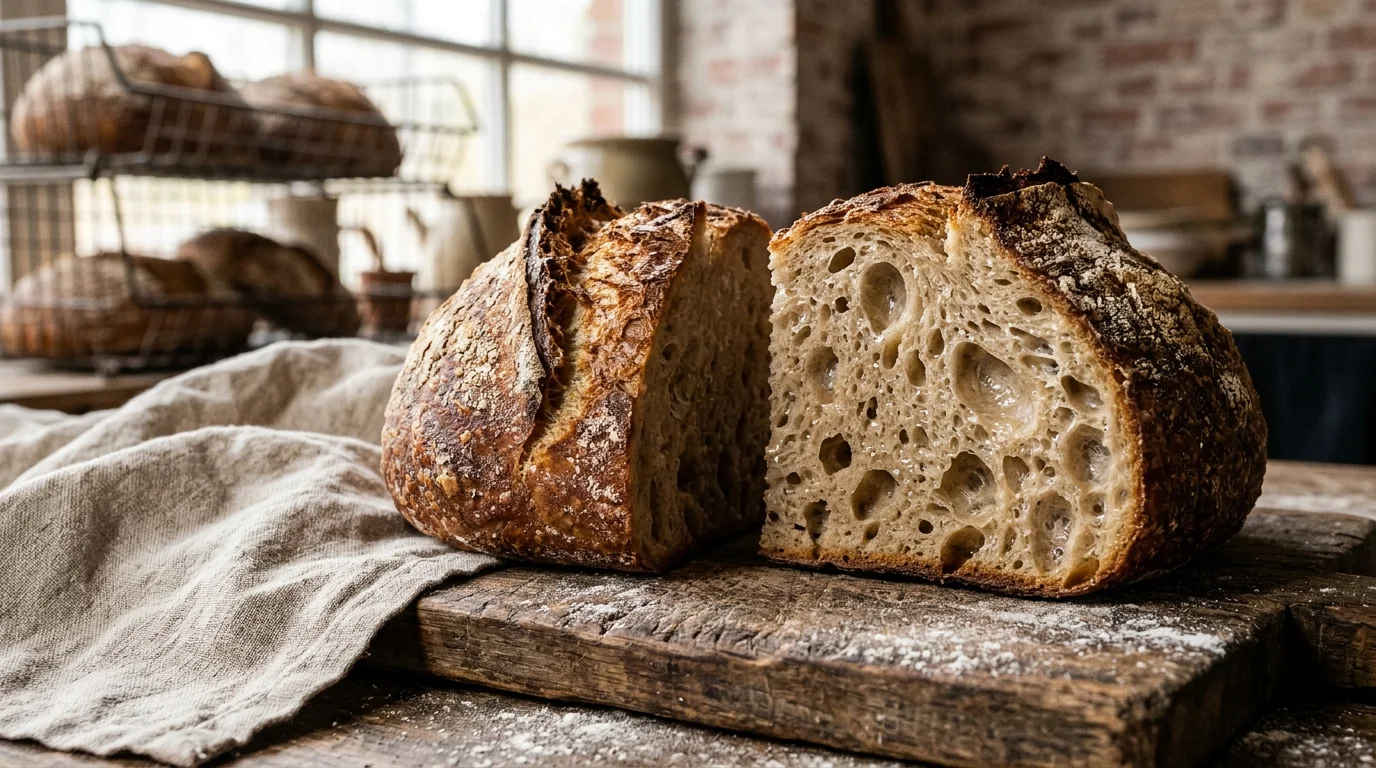
The Physics of Scoring: Blade Angles and Depth
Scoring is not merely decorative; it is a structural relief valve. Without a deliberate slash, the top crust sets first in the intense radiant heat of the oven, forcing expanding gases to rip violently through the weakest point—usually the bottom seam.
| Scoring Goal | Blade Type | Blade Angle to Dough | Depth & Placement | Best Recipes |
|---|---|---|---|---|
| Dramatic Single Ear (Batard/Boule) | Curved lame | 25°–35° shallow angle (undercutting the top flap) | 1/2 inch (12mm) deep, offset 1 inch from center ridge, tip to tail | Classic Dutch Oven Boule, Same-Day Express Batard |
| Symmetric Cross / Square Bloom | Straight lame | 80°–90° perpendicular to the surface | 3/8 inch (10mm) deep across the crown | Cranberry Walnut Sourdough, Nordic Seeded Rye |
| Decorative Wheat Stalks & Leaves | Straight razor corner | 90° perpendicular, light flicks | 1/16 inch (1.5mm) — score only the rice-floured skin before the main expansion cut | All artisan gift and holiday loaves |
The Two-Stage Dutch Oven Bake Protocol
Heavy cast-iron Dutch ovens and combo cookers replicate professional deck ovens by trapping the moisture evaporating from the dough itself:
- Preheat: Place your Dutch oven (lid and base) inside the oven at 500°F (260°C) for 45 minutes so the cast iron reaches thermal equilibrium.
- Stage 1 — Steamed Expansion (20 Minutes Covered): Turn your cold loaf out of the banneton onto parchment, dust with rice flour, and score swiftly. Transfer into the Dutch oven, slip one small ice cube behind the parchment paper, clamp the lid on, and immediately lower the oven to 475°F (245°C) for 20 minutes.
- Stage 2 — Maillard Caramelization (20–25 Minutes Uncovered): Remove the lid (your loaf should now be tall, pale blonde, and fully sprung). Reduce temperature to 450°F (230°C) and bake uncovered for 20 to 25 minutes until deep chestnut-mahogany and the internal temperature registers 206°F–210°F (97°C–99°C).
- Cure on Wire Rack (10 Minutes in Turned-Off Oven, Optional): For a shatteringly crisp crust that resists softening in humid climates, turn off the oven, crack the door 2 inches, and leave the loaf directly on the bare oven rack for 10 minutes before cooling for 90 minutes on a wire rack.
Open-Baking With a Baking Steel (For Baguettes, Ciabatta & Multiple Loaves)
When baking High-Hydration Sourdough Ciabatta Rolls or two boules at once without a Dutch oven, place a 1/4-inch baking steel on the middle rack and a cast-iron skillet filled with lava rocks (or a rolled-up 100% cotton kitchen towel soaked in boiling water) on the bottom rack. Pour 1 cup of boiling water into the lava-rock pan as you slide the loaves onto the steel, and vent the steam after 18 minutes.
Frequently Asked Questions
Array
Continue Reading
More from Sourdough & Wild Fermentation

2 min read
Is Sourdough Bread Vegan? Grocery and Bakery Label Checks for Honey, Whey, L-Cysteine, and Milk Wash
How to verify whether supermarket, restaurant, or bakery sourdough bread is 100% vegan in 30 seconds: spotting hidden dairy, honey, L-cysteine dough conditioners, mono- and diglycerides, and egg/milk washes.
2 min read
Sourdough Fermentation and Gut Health: How Wild Lactic Acid Bacteria Degrade Phytic Acid, Lower Glycemic Response, and Reduce FODMAPs
The peer-reviewed nutritional biochemistry of long-fermented sourdough: how pH below 5.5 activates phytase to unlock iron, zinc, and calcium, reduces wheat fructans (FODMAPs), and moderates post-meal glucose spikes.
2 min read
Gluten-Free and Ancient Grain Sourdough: Brown Rice Starters, Psyllium Husk Gel Mechanics, and Einkorn/Rye Hydration Adjustments
How to build a celiac-safe brown rice or sorghum sourdough starter, engineer elastic gluten-free doughs with whole psyllium husk gel, prevent purple crumb discoloration, and bake with einkorn, spelt, and dark rye.