Cast Iron Cooking for Vegan Kitchens: Crispy Tofu, Charred Vegetables, and Care
How to heat, season, and cook in cast iron for plant-based food: crispy tofu, charred vegetables, smash potatoes, and what to avoid.
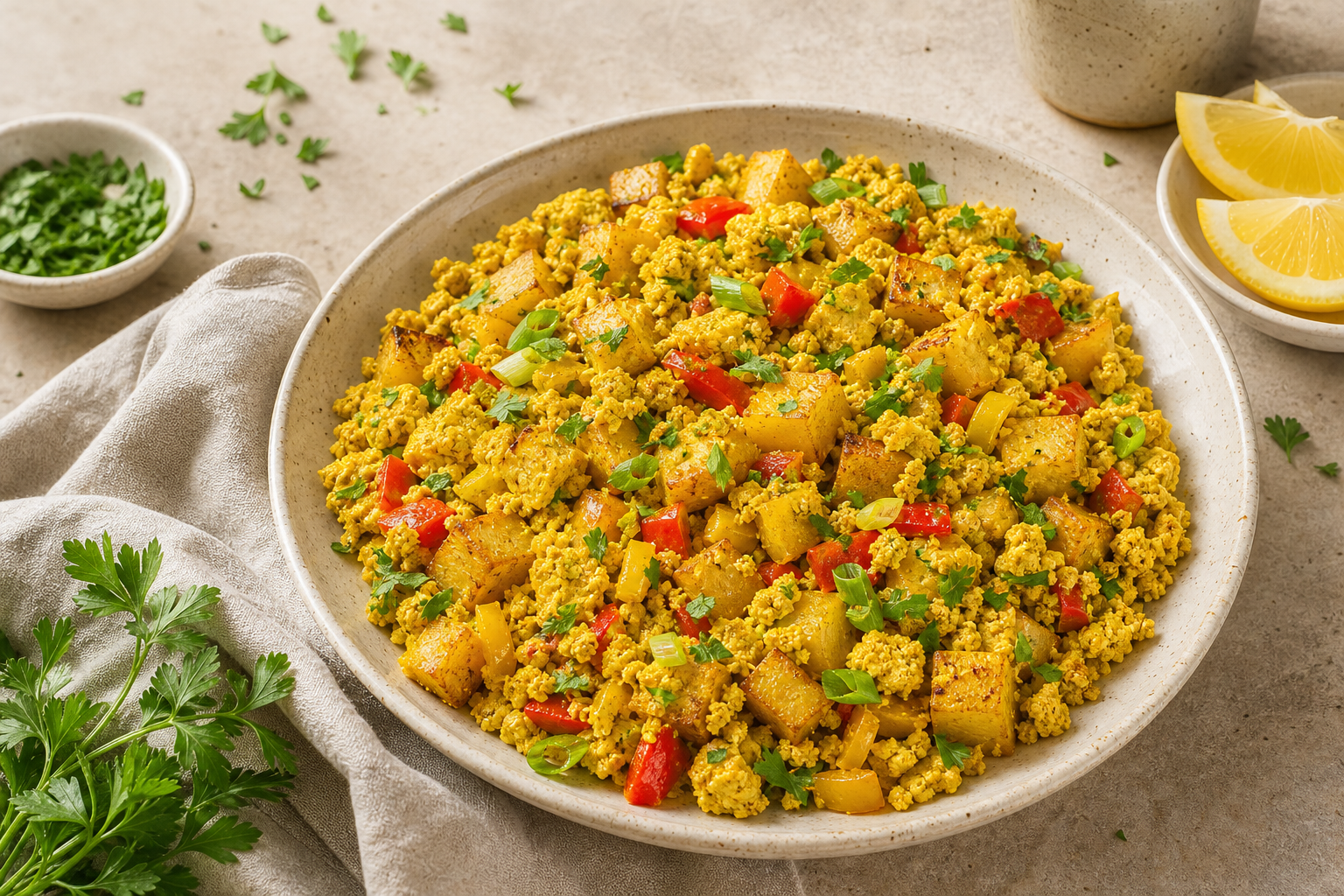
Plant foods are full of water. Tofu, mushrooms, zucchini, and eggplant all dump moisture into a pan the moment they hit heat, and a thin pan’s temperature collapses. That is why so many home cooks end up with pale, rubbery tofu and soggy vegetables. A heavy cast iron skillet stores enough heat to boil that water off almost instantly and keep browning. Here is how to use one well.
Why cast iron works so well for plant-based food
Cast iron is not a fast conductor. It heats slowly and unevenly at first, but once it is hot it holds that heat like a battery. When you drop a pound of cold tofu into a 10- or 12-inch skillet, a lightweight nonstick pan might fall 100 degrees or more. Cast iron drops less and recovers faster. The result is a real crust.
- Browning: The Maillard reaction and caramelization need surface temperatures well above boiling. Cast iron keeps the surface there even with watery food.
- Charring: Blistered shishito peppers, blackened corn, and charred broccoli need very high, dry heat that nonstick coatings should not be exposed to.
- Oven to stovetop: You can sear on the burner and finish in a 425°F oven without changing pans.
- Durability: A cast iron pan has no coating to scratch, so metal spatulas are fine.
How to preheat cast iron properly
Most sticking problems are preheating problems. Cast iron needs time for heat to spread from the burner to the edges.
- Set the dry pan over medium heat for 4 to 6 minutes. Going straight to high creates a scorching hot spot in the center and cool edges.
- Test it: flick in a few drops of water. If they skitter across the surface as beads, the pan is ready. If they sizzle and evaporate in place, wait another minute.
- Add oil only now, about 1 to 2 tablespoons for a 12-inch pan. It should shimmer and flow easily within seconds.
- Adjust the heat to medium-high for searing or keep it at medium for anything with sugar in the glaze.
Choose an oil with a smoke point that suits the job. Refined avocado, peanut, canola, and refined sunflower oil handle searing. Extra-virgin olive oil works for medium-heat cooking but smokes sooner. Toasted sesame oil is a finishing oil, not a searing oil.
Crispy tofu in a cast iron skillet
This is the method cast iron was made for. For a deeper comparison of techniques, see our guide to five ways to make crispy tofu.
- Use extra-firm or firm tofu. Press it for 15 to 20 minutes if it is water-packed; our guide on when to press tofu and when to skip it explains why.
- Cut into 3/4-inch cubes or 1/2-inch slabs, or tear it into rough pieces for more craggy edges.
- Toss with a pinch of salt and 1 to 2 tablespoons of cornstarch per 14-ounce block for a crisper shell. This step is optional but reliable.
- Add the tofu to a preheated, oiled pan in a single layer with space between pieces. Crowding traps steam.
- Do not touch it for 3 to 5 minutes. When the bottom is golden, it will release from the pan without tearing.
- Turn and brown at least two more sides, about 2 to 3 minutes each. Total time is usually 10 to 14 minutes.
- Add sauce last, off the heat or on low, and toss for 30 seconds. Sugary sauces burn fast in a hot iron pan.
Try it in crispy sesame tofu cucumber rice bowls or the Chinese five-spice tofu with green beans, where the green beans can blister in the same pan after the tofu comes out.
Charred vegetables: times and heat levels
For char, you want a hot, dry pan and vegetables that are dry on the surface. Pat washed vegetables with a towel. Toss them in oil in a bowl rather than pouring oil into the pan, so every piece is lightly coated.
| Vegetable | Cut | Heat | Approximate time | Tip |
|---|---|---|---|---|
| Broccoli or cauliflower | Florets with a flat side | Medium-high | 6-8 min | Place flat side down; add 2 tbsp water and cover for the last minute to cook through. |
| Mushrooms | Halved or thick sliced | Medium-high | 8-10 min | Salt only after they brown, or they release water early. |
| Corn kernels | Cut from the cob | High | 4-6 min | Stir rarely. Great in charred corn and poblano tacos. |
| Shishito or padron peppers | Whole | High | 4-6 min | Turn when blistered on one side; finish with flaky salt. |
| Zucchini | Halved lengthwise | Medium-high | 4-5 min cut side down | Score the flesh so moisture escapes. |
| Cabbage wedges | 1.5-inch wedges, core on | Medium-high, then oven | 4 min per side + 15 min at 425°F | The core holds the wedge together. |
| Green beans | Trimmed, whole | High | 5-7 min | Work in batches; blistered skins mean flavor. |
Always leave a little space between pieces. If your vegetables fill the pan more than one layer deep, cook them in two batches and keep the first warm on a sheet pan in a low oven.
More vegan dishes that shine in cast iron
Smashed potatoes
Boil small potatoes until tender, about 15 to 20 minutes. Smash them flat, then fry in 3 tablespoons of oil over medium-high for 5 to 6 minutes per side until deeply browned.
Skillet cornbread
Preheat the skillet with oil in a 425°F oven, then pour in the batter. The sizzle sets a crisp crust. Use a flax or applesauce egg replacement; our vegan baking converter will handle the eggs, milk, and butter in your family recipe.
Tempeh and seitan
Both brown beautifully in cast iron. Tempeh slices take 3 to 4 minutes per side at medium heat, and seitan cutlets take about 3 minutes per side.
Flatbreads and tortillas
A dry, hot cast iron pan (no oil) puffs flatbreads in about 1 minute per side and warms corn tortillas in 30 seconds per side.
Seasoning cast iron with plant oils
Seasoning is a layer of oil that has been heated past its smoke point until it polymerizes into a hard, slick coating. It is not animal fat by necessity. If you season your own pan with a plant oil, it is entirely plant-based. If you buy a pre-seasoned pan and want to know what was used, check the manufacturer’s website or contact them, since practices vary.
- Wash the pan and dry it completely over a burner.
- Rub a very thin layer of neutral oil (canola, vegetable, sunflower, or flaxseed) over every surface, including the handle and bottom.
- Wipe it off with a clean cloth as though you made a mistake. Too much oil becomes sticky, blotchy seasoning.
- Bake upside down at 450 to 500°F for 1 hour with foil on the rack below to catch drips. Let it cool in the oven.
- Repeat 2 to 3 times for a new or stripped pan.
After that, everyday cooking with oil maintains the seasoning. Frying and searing build it; long acidic simmers and scrubbing with steel wool wear it down.
Cleaning and everyday care
- Wash while warm. Hot water and a brush or chain-mail scrubber lift most residue. A little dish soap is fine.
- Stuck-on food: Simmer an inch of water for 3 to 5 minutes, then scrape. Or scrub with coarse salt and a splash of oil.
- Dry immediately. Set the pan on a burner for 2 minutes, then rub in a few drops of oil while it is warm.
- Never soak it or run it through the dishwasher. That is how rust starts.
- Rust spots: Scrub them away with steel wool, rinse, dry, and reseason.
Troubleshooting common cast iron problems
| Problem | Likely cause | Fix |
|---|---|---|
| Tofu or potatoes stick and tear | Pan too cool, too little oil, flipped too early | Preheat longer, use more oil, wait for natural release. |
| Vegetables steam and go soft | Crowded pan or wet vegetables | Cook in batches; dry the vegetables well. |
| Food tastes metallic | Long acidic cooking or thin seasoning | Move tomato and wine braises to enameled or stainless pans. |
| Sticky, tacky surface | Too much oil during seasoning | Bake again at 450°F for an hour, or scrub and reseason thinly. |
| Black flakes on food | Carbon buildup or flaking seasoning | Scrub with salt and oil; reseason if flakes continue. |
| Smoke alarm goes off | Oil past its smoke point | Lower heat; switch to a refined, high smoke point oil. |
A few safety notes
Cast iron handles get just as hot as the pan, and they stay hot for a long time. Keep a thick, dry towel or a silicone handle sleeve nearby, and assume the handle is hot whenever the pan has been near heat. Wet towels conduct heat and can scald you. If oil ever catches fire, turn off the heat and cover the pan with a metal lid or baking sheet. Never throw water on an oil fire.
Your next step
Pick one dish this week that usually disappoints you in a nonstick pan, such as mushrooms or tofu, and cook it in cast iron using the preheat test above. Once that works, build flavor around the crust with our guide to building umami in vegan cooking. Not sure what to make with what is already in your fridge? Try the Fridge Scan tool and look for anything that says “seared,” “blistered,” or “charred.”
Frequently Asked Questions
Is cast iron seasoning vegan?
Seasoning is just oil polymerized onto the metal. If you season it yourself with a plant oil it is fully vegan; for a factory-seasoned pan, check the manufacturer’s website for the oil they use.
Can I cook tomato sauce in cast iron?
A quick pan sauce or a short simmer is fine in a well-seasoned pan. Long, acidic braises can strip seasoning and give food a metallic taste, so use enameled or stainless steel for those.
Why does my tofu stick to cast iron?
Usually the pan was not hot enough, there was too little oil, or you tried to flip too soon. Let the tofu release on its own once a crust forms, which takes 3 to 5 minutes per side.
Can I use soap on cast iron?
Yes. Modern dish soap will not strip polymerized seasoning. Avoid soaking the pan or putting it in the dishwasher, and dry it on the burner afterward.
Does cooking in cast iron add iron to food?
It can add small, variable amounts, especially with moist or acidic foods cooked for longer. Treat it as a minor bonus rather than a reliable iron source.
Continue Reading
More from Cooking Techniques
6 min read
How to Make Crispy Tofu: Five Methods Compared
Pan-seared, cornstarch-fried, baked, air-fried, or deep-fried: five ways to make crispy tofu, with times, temperatures, and what each is best for.
6 min read
How to Press Tofu (and When You Should Not Bother)
How to press tofu with a towel, a press, or the freezer, how long it takes, and which tofu types and dishes are better left unpressed.
3 min read
How to Build a Vegan Sauce Without a Recipe
A dependable ratio for creamy, herby, and savory vegan sauces.